
The Department of Climate Change (DoCC) and CARE Vanuatu have signed a Memorandum of Understanding (MoU) to work together in support of locally led climate change adaptation, loss and damage response, and inclusive development.
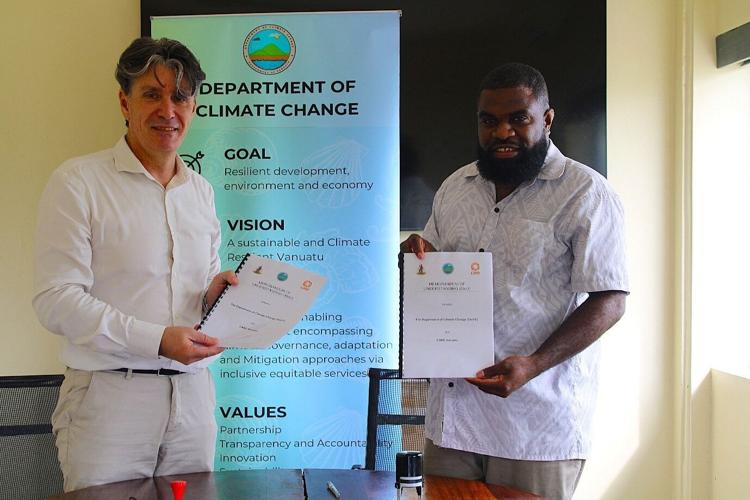
This partnership aims to benefit all Ni Vanuatu, with particular attention to the rights and leadership of women, youth, and people with disabilities, according to a statement from CARE.
The collaboration aligns with key national frameworks, including the National Sustainable Development Plan (NSDP), the Climate Change and Disaster Risk Reduction Policy, and Vanuatu’s Nationally Determined Contribution (NDC).
Through this agreement, both parties aim to ensure climate interventions are inclusive, nationally aligned, and grounded in local needs.
The MoU sets out how the parties will coordinate planning, technical support, and community engagement. It is non-financial, with specific activities and funding arrangements to be defined in separate project documents.
The partnership builds on an integrated approach to resilience, strengthening local systems, linking community action with provincial and national planning, and supporting Vanuatu’s decentralisation so Area Councils and provincial structures are equipped to lead.
“The signing of this MoU reflects our renewed commitment to work together in support of community resilience,” Acting Director of the Department of Climate Change Nelson Kalo said in the statement.
“It helps align support across government, civil society, and communities so that efforts are complementary and better meet the needs of people on the ground, especially in places like Tafea Province where CARE already works.”
“This MoU formalises our continued collaboration and shared focus on locally led climate action,” Country Director for CARE Vanuatu Sébastien Fesneau said.
“By aligning CARE’s integrated programming and technical support with DoCC priorities, we aim to strengthen community driven solutions that protect livelihoods and build resilience, especially for women and other groups facing higher climate risks.”
This partnership recognises that effective climate action requires coordinated efforts across government, civil society, the private sector, and communities, and that locally led approaches and stronger local institutions are essential for building durable, inclusive resilience across Vanuatu.